ComfortView vs Split Tier Workstations
Josh Patrick
READ NOW

April 24, 2026
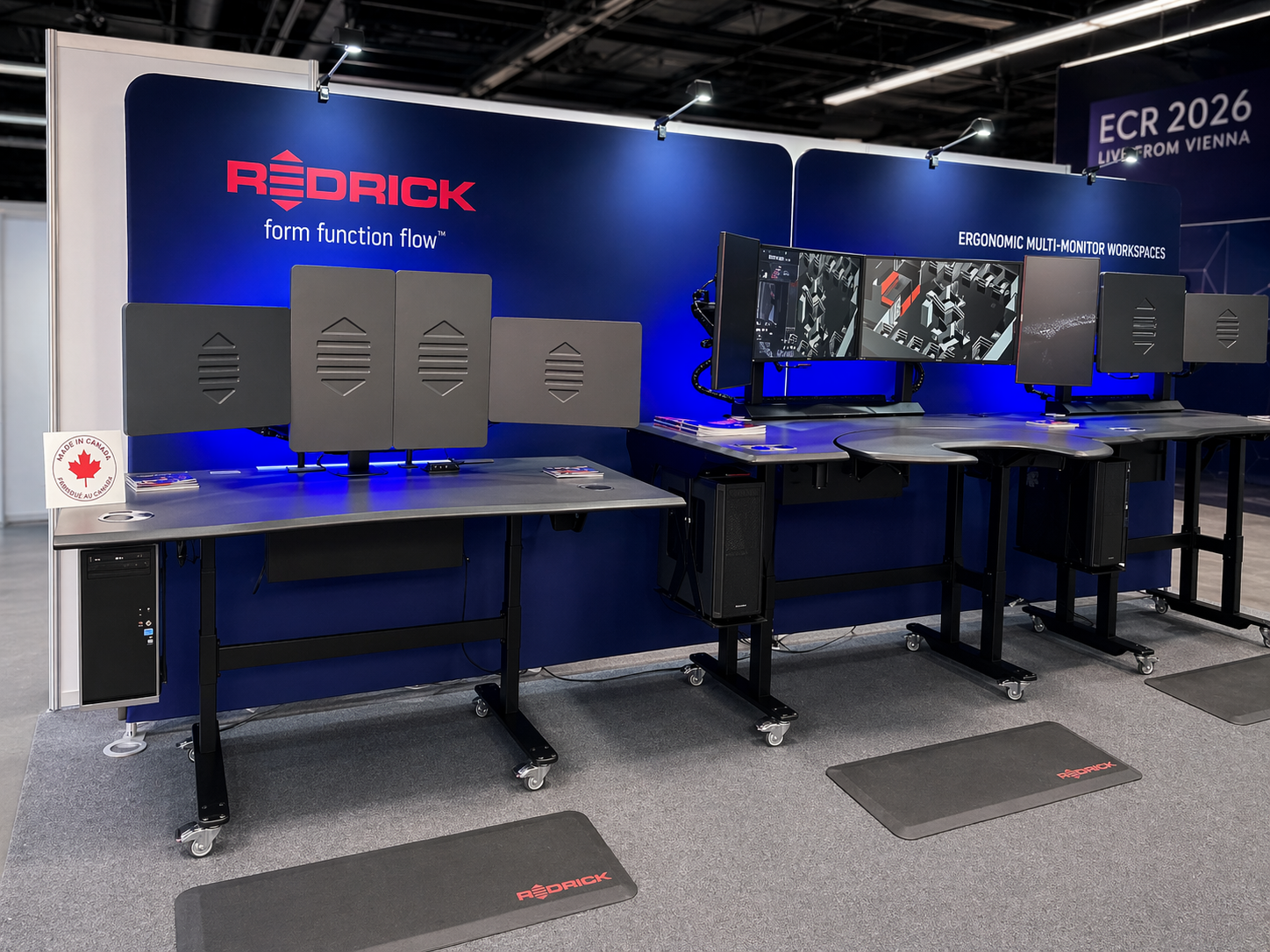
We recently returned from the European Congress of Radiology, and it was an incredibly valuable experience as our first meaningful step into engaging with the European radiology community.
One of the biggest surprises for us was the level of interest, paired with a common reaction we heard again and again:
“Where have you been?”
It quickly became clear that many radiology teams across Europe simply haven’t been exposed to what a truly ergonomic, fully adjustable reading environment can look like. Most are still working within fixed workstation setups that offer little flexibility.
That reality showed up consistently in our conversations.
We met radiologists dealing with ongoing neck and shoulder strain, not because of the work itself, but because their environments don’t adapt to them. Monitor positions, focal distance, and overall layout are often constrained, forcing clinicians to adjust their posture and habits around the workstation, rather than the other way around.
That’s where the strongest resonance came through.
The idea that a reading workstation could be designed around the individual — supporting natural posture, flexible monitor positioning, and personalized workflows — was, for many, a new and exciting concept. The response to that shift in thinking was immediate.
What stood out most was the enthusiasm. There is a clear appetite for improved ergonomic solutions, and a growing awareness of the role the physical environment plays in long-term comfort, focus, and performance.
We left ECR energized by the conversations we had and the people we met. It reinforced something we’ve believed for a long time: better ergonomic design isn’t a luxury in radiology reading environments — it’s a necessity.
We’re looking forward to continuing those conversations and returning to Europe soon.
If you’re working within radiology or healthcare environments in Europe and are interested in exploring what a more adaptable, ergonomic reading space could look like, we’d welcome the opportunity to connect.
2025 © RedRick Technologies.
All Rights Reserved.
Web design & developed by Duco Media & Kick Ass Digital Media