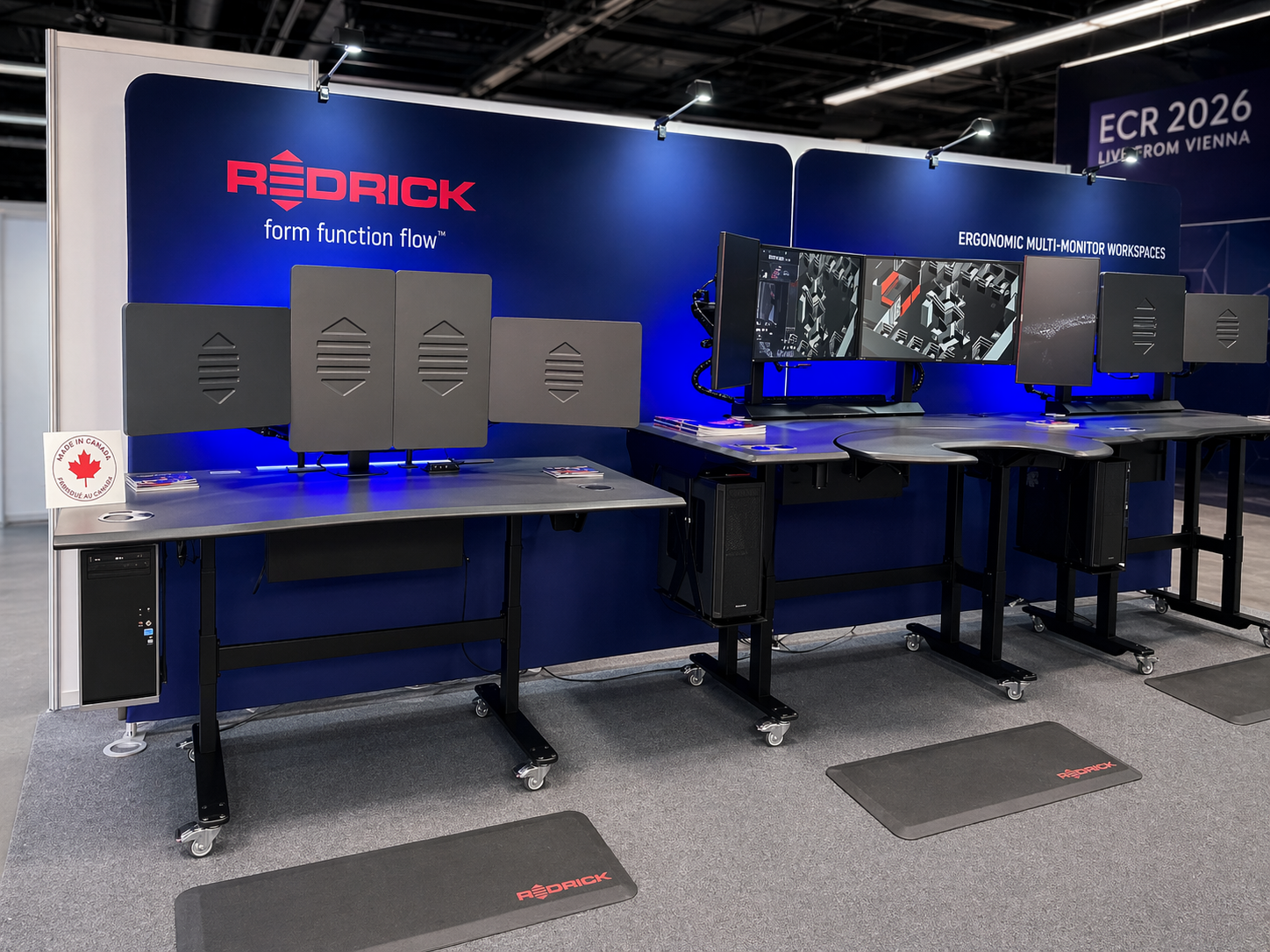
ComfortView vs Split Tier Workstations
Josh Patrick
READ NOW

January 2, 2026
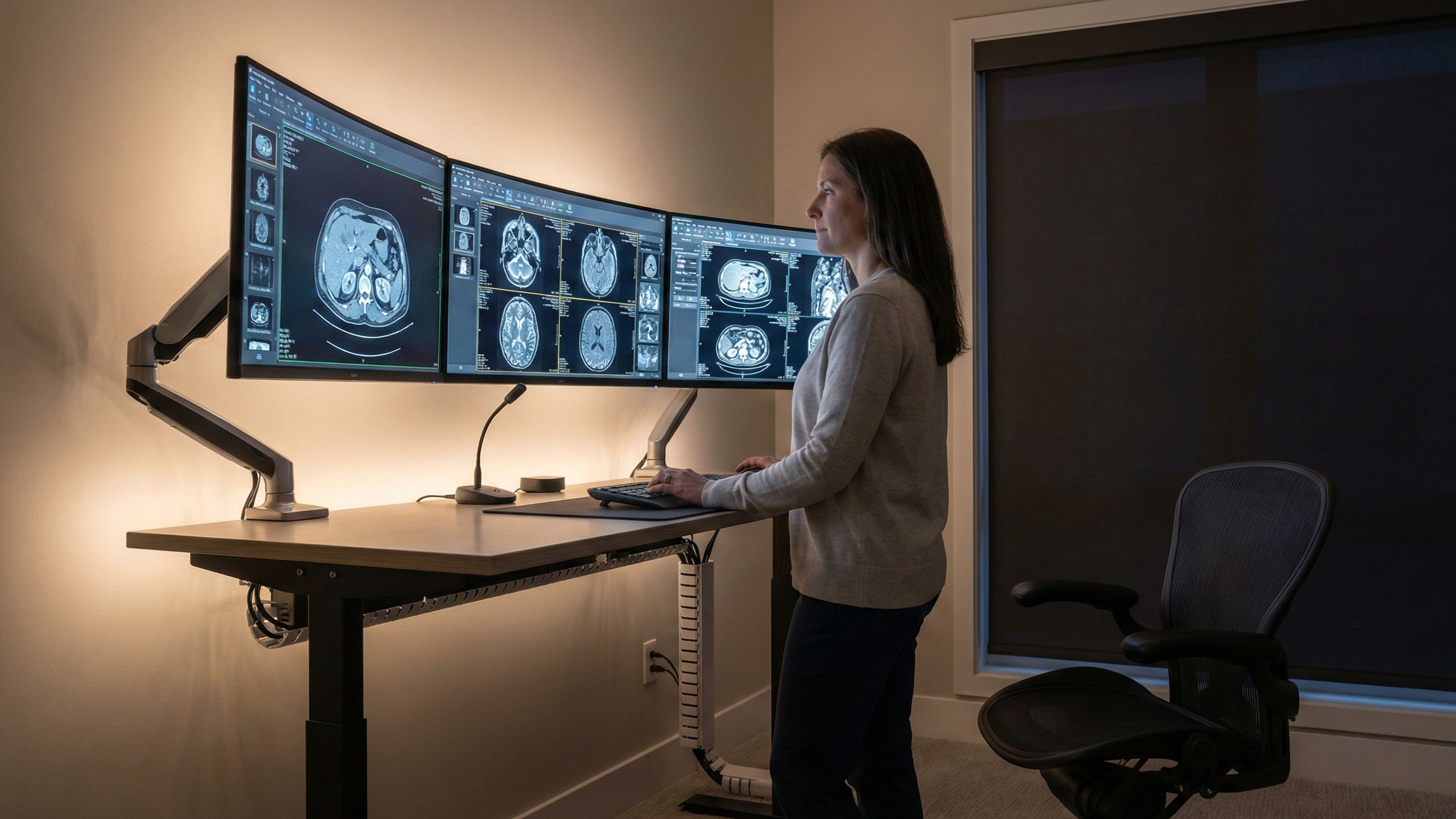
Home reading is no longer an emergency workaround or a pandemic-era exception. It has quietly become a permanent, structural part of how radiology is practiced. Many radiologists now split their time between hospital reading rooms and home workstations, and for some, remote interpretation is where the majority of their clinical work happens.
A 2025 review in Insights into Imaging took a close look at this shift. The authors examined the technical requirements and optimization strategies for home‑based teleradiology workstations, asking a simple but crucial question: can home reading truly match the quality and reliability of hospital-based interpretation? Their answer was reassuring. When workstations are designed to meet appropriate technical, environmental, and ergonomic standards, home reporting can deliver diagnostic performance equivalent to traditional reading rooms—often with higher satisfaction and less perceived stress for radiologists.
The review also makes clear that this transition is not a niche trend. During the COVID‑19 pandemic, most institutions rapidly deployed home workstations out of necessity. In the years since, many of those “temporary” solutions have evolved into permanent infrastructure, now supporting routine daytime lists as well as after-hours coverage. Home reading is no longer an add‑on to the workflow; it is woven into the core fabric of service delivery.
That reality has a direct implication: if radiologists are going to spend a significant portion of their working lives interpreting studies from home, workstation quality can’t be an afterthought. The same care that has traditionally gone into designing hospital reading rooms now needs to be applied to spare bedrooms, home offices, and dedicated remote workspaces.
In the rest of this article, we’ll unpack the key insights from the 2025 review and translate them into practical considerations for radiology leaders. We’ll also explore how purpose‑built ergonomic workstations can help turn those recommendations into day‑to‑day reality—for both hospital and home environments.
The review paints a clear picture of how quickly home reading has become standard:
In other words, home reading is baked into core workflows.
Crucially, the authors report that when workstations meet appropriate technical and ergonomic standards, home reporting can achieve diagnostic performance equivalent to hospital reading rooms, with many radiologists reporting lower stress and comparable turnaround times.
If home reading is here to stay, workstation quality can’t be an afterthought.
The 2025 review breaks down a successful home teleradiology setup into several pillars:
Medical‑grade monitors with appropriate resolution, luminance, and calibration for the modalities being read. Displays must be stable and mounted so that viewing geometry does not drift during use.
Controlled ambient lighting (neither too bright nor too dim), avoidance of glare and reflections, and a quiet space free of visual distractions. Temperature and ventilation need to support long, focused reading sessions.
Adjustable seating, work surfaces, and independent monitor positioning so radiologists can maintain neutral postures over many hours. The paper emphasizes sit–stand capability and “dynamic” setup that supports micro‑movements throughout the day.
Sufficient computing power, secure connectivity, and responsive PACS/RIS workflows so that home reading feels as fluid as reading on‑site.
Processes to ensure that home and hospital workstations meet the same display and environmental standards, so diagnostic quality is consistent across sites.
For RedRick, that third pillar — ergonomic workstation design — is where our work directly intersects with the study’s recommendations.
Separate research has shown that most radiologists experience musculoskeletal discomfort, especially in the neck, shoulders and back, when working at poorly adjusted PACS stations. Early home work setups were often “makeshift”: kitchen tables, office desks never meant for multi‑monitor reading, or screens sitting on stacks of books.
The 2025 review connects this reality to risk:
Using the review and current ergonomics guidance, here’s a practical checklist departments can use when specifying home teleradiology workstations.
RedRick’s product lines — from multi‑display monitor mounting systems to height‑adjustable workstations — were built around radiology’s ergonomic needs long before this 2025 review, but they map closely to its findings.
Our multi‑monitor mounting solutions allow radiologists to move each display up, down, forward, back and tilt it without disturbing the work surface. This supports the dynamic, personalized positioning the study calls for and helps keep the neck and shoulders in neutral postures throughout long reading sessions.
RedRick’s height‑adjustable desks provide smooth, stable transitions between sitting and standing, encouraging radiologists to change position regularly. That aligns directly with the review’s emphasis on workstations that support movement rather than locking users into a single posture.
Our workstation designs can incorporate bias lighting and thoughtful cable pathways so ergonomics and infrastructure are not working at cross‑purposes. Clean cabling, right‑sized work surfaces and appropriate lighting all contribute to the “environmental controls” described in the paper.
By using the same ergonomic principles in centralized reading rooms and home‑office setups, departments can create consistent standards. A radiologist’s body shouldn’t have to adapt dramatically just because they’re reading from home instead of in‑hospital.
The 2025 review’s core message is optimistic: with the right setup, home teleradiology does not have to be a compromise. Properly designed workstations can sustain diagnostic performance, improve flexibility, and reduce stress.
But getting there takes more than shipping a monitor to someone’s spare room. It requires:
For imaging directors, IT leaders and practice owners, that means ergonomic design belongs in the same conversation as PACS upgrades and network planning.
The 2025 Insights into Imaging review gives the field a current blueprint for what high‑performance home teleradiology should look like. It reinforces what many radiologists already know from experience: ergonomics isn’t a luxury — it’s a clinical requirement.
RedRick’s role is to turn that blueprint into reality. By combining adjustable workstations, intelligent monitor mounting and reading‑room design expertise, RedRick helps departments build home and hospital environments that are aligned with the latest science and built for the long term.
If your organization is planning or expanding home reading, this is the moment to move from improvised desks to evidence‑based workstation design. RedRick can help you design, specify and deploy ergonomic solutions that protect your radiologists — and the quality of every report they deliver.
2025 © RedRick Technologies.
All Rights Reserved.
Web design & developed by Duco Media & Kick Ass Digital Media